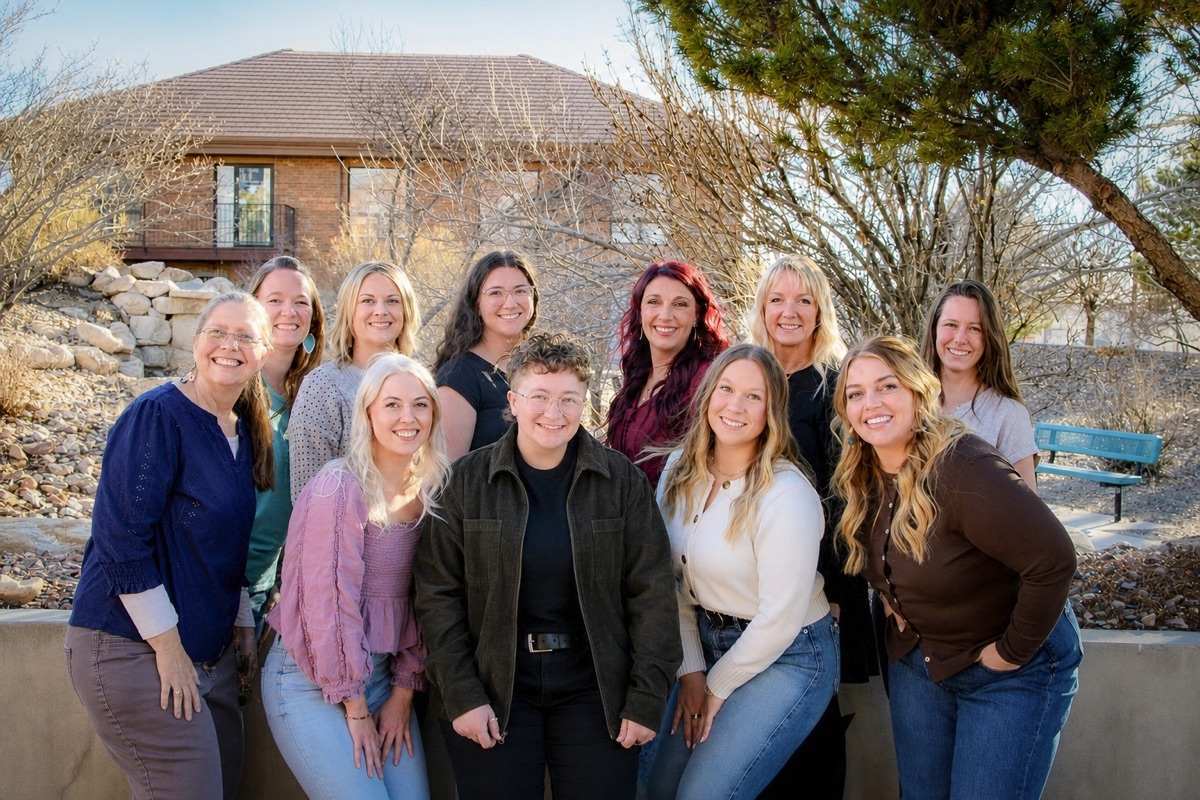
At Mending Minds, we work with men in Cedar City and across Southern Utah who are dealing with stress, anger, depression, relationship problems, past trauma, or just the weight of carrying everything without ever talking about it. Our clinicians are trained in multiple modalities — including approaches that go beyond sitting on a couch and talking about your childhood.
If you or someone you know is in crisis: Call or text 988 (Suicide & Crisis Lifeline) anytime, 24/7. You can also text HOME to 741741 (Crisis Text Line). In Utah, men die by suicide at nearly three times the rate of women. You are not alone, and help is available right now.
Why Men Don't Seek Therapy
Let's name the obvious: most men don't grow up being told it's okay to ask for help with how they feel. In Utah — and especially in smaller, rural communities like Cedar City, Parowan, Enoch, and across Iron County — there's often an unspoken expectation that men should handle things on their own. Tough it out. Provide. Don't complain.
That message gets reinforced everywhere: family, faith communities, workplaces, friend groups. And for a long time, it might even seem to work. Until it doesn't.
The truth is, "handling it" often means pushing it down — and what gets pushed down doesn't disappear. It comes out sideways. As anger. As drinking. As pulling away from the people you love. As working 60 hours a week so you never have to sit still with your own thoughts.
Reaching out for help isn't weakness. It's a practical decision — the same kind of decision you'd make if your truck's engine was knocking. You wouldn't just turn up the radio.
What Men's Mental Health Issues Actually Look Like
Depression and anxiety in men don't always show up the way people expect. You might not feel "sad" in a recognizable way. Instead, you might notice:
- Anger and irritability that's disproportionate to the situation — snapping at your partner, your kids, coworkers
- Withdrawal from family, friends, and activities you used to enjoy — hunting, sports, time outdoors
- Substance use — drinking more than you mean to, using substances to take the edge off
- Workaholism — staying busy to avoid feeling, mistaking exhaustion for productivity
- Risk-taking behavior — driving too fast, picking fights, reckless decisions that feel impulsive in hindsight
- Physical symptoms — headaches, back pain, stomach issues, chest tightness with no medical explanation
- Emotional numbness — going through the motions but not feeling connected to anything
- Relationship problems — difficulty communicating, emotional distance from your partner, repeated conflicts
If you recognize yourself in that list, you're not failing. Your mind and body are telling you that something needs attention. Depression and anxiety are among the most treatable conditions in mental health — when you actually address them.
The Numbers in Utah
This isn't abstract. In Utah, men die by suicide at nearly three times the rate of women. Utah consistently ranks among the highest states in the nation for suicide deaths, and rural communities like Southern Utah are disproportionately affected. Iron County is not immune.
These numbers reflect a gap — not in toughness, but in access to and willingness to use mental health support. The men behind those statistics weren't weak. Many of them were the ones everyone else leaned on. They just never had someone to lean on themselves.
If that resonates with you, please read that crisis callout above. And consider that making a phone call today could change the trajectory of everything.
How Therapy at Mending Minds Is Different
We know what a lot of men picture when they think of therapy: sitting in a dimly lit room, being asked "and how does that make you feel?" on repeat. That's not what this is.
Therapy at Mending Minds is tailored to you. If you want practical strategies and concrete tools, we can do that. If you want to understand why you keep reacting the same way in certain situations, we can do that too. The approach fits you — not the other way around.
EMDR Therapy
Eye Movement Desensitization and Reprocessing helps your brain process stuck memories and experiences — without requiring you to narrate every detail. It's direct, it's evidence-based, and many men find it more effective than talk therapy alone. Learn more about EMDR.
Brainspotting
A focused, action-based approach that uses your visual field to access and process difficult experiences stored in the brain. Like EMDR, it works at a level deeper than conversation — which can be a relief if you're not sure how to put what you're feeling into words.
Individual Talk Therapy
Straightforward, one-on-one sessions with a licensed therapist. These can be goal-oriented (managing anger, improving communication, navigating a specific situation) or more exploratory, depending on what you need. You're in the driver's seat.
Couples Counseling
If your relationship is where things are breaking down, couples counseling can help you and your partner communicate without it turning into the same fight every time. We work with both of you — not against either of you.
The common thread: these aren't passive approaches. You won't just be sitting there. You'll be doing something — processing, practicing, building skills you can use outside the therapy room.
What the First Session Looks Like
Your first appointment at Mending Minds is a conversation — not an interrogation. Your therapist will ask about what's going on, what you're hoping to get out of therapy, and what has or hasn't worked in the past. There's no pressure to share everything right away. Some guys come in with a clear issue they want to work on. Others just know something's off and want to figure out what it is.
Both are fine. The point of the first session is to figure out if the fit feels right and to start building a plan that makes sense for you.
We offer both in-person sessions at our Cedar City office and telehealth appointments for clients across Utah — so if showing up in person feels like too much right now, you can start from wherever you are.
Insurance and Affordability
We believe cost shouldn't stop you from getting help. Mending Minds is in-network with several major insurance providers. We also offer self-pay rates and a sliding scale program for clients who need it. Visit our insurance page or call us at (435) 263-0254 to verify your coverage.
Take the First Step
You don't need a breakdown to justify a phone call. If something's not working — if you're angry more than you want to be, or numb more than you should be, or just tired of carrying everything alone — that's enough.
Schedule a free consultation or call (435) 263-0254. We're at 88 E Fiddlers Canyon Rd, Suite 110, in Cedar City — serving men and families across Iron County and Southern Utah.
Making the call is the hardest part. Everything after that gets easier.
Related Services
If you're dealing with persistent low mood, explore our depression therapy page. For anxiety, panic, or constant worry, visit anxiety therapy. If past experiences are driving what you're feeling now, learn about our trauma and EMDR therapy. And if your relationship needs attention, see couples counseling.
Frequently Asked Questions
Is therapy for men different from regular therapy?
At Mending Minds, therapy is tailored to each client — not a gender-based formula. That said, many men respond well to approaches that are practical, goal-oriented, and action-based. We offer modalities like EMDR and brainspotting that don't rely on traditional talk-therapy formats, which some men find more effective.
What if I've never talked about my feelings before?
That's completely okay. You don't need to walk in with a speech prepared. Your therapist will meet you where you are — whether that means starting with concrete problems you want to solve, situations you want to handle differently, or just acknowledging that something isn't working. Therapy at Mending Minds moves at your pace.
Do you offer therapy for anger management?
Yes. Anger is one of the most common reasons men seek therapy, and it's often connected to deeper issues like unresolved stress, trauma, or depression. Our clinicians help you understand what's driving the anger and develop practical strategies for managing it — without just telling you to "calm down."
Does Mending Minds accept insurance for men's therapy?
Yes. We're in-network with several major insurance providers and also offer affordable self-pay rates and a sliding scale program for those who qualify. Call (435) 263-0254 or visit our insurance page for details.
What does the first therapy session look like?
Your first session is a conversation — not an interrogation. Your therapist will ask about what's going on, what you're hoping to get out of therapy, and what's worked or not worked in the past. There's no pressure to share everything right away. Think of it as a chance to see if the fit feels right.